Tuesday, 6 December 2011

Haggling!

Gaining the right price whilst away is very important. It can become very confusing trying to work out currency conversions, so it’s always best to take your time and work out whether the deal in front of you is a good one before committing. Remember, you can always walk away!

Please find a few tips below:

  1. Research prices before you step foot in the shop or market. Search on the internet or look at guide books, such as Lonely Planet.
  2. Ensure it is an appropriate place to haggle. For example a Flea Market usually would be acceptable.
  3. Be friendly when you start a conversation regarding prices and test out your local language skills.
  4. Ask them for a price first. If they do not give you a price and push the question towards you, start with a ‘silly price'. This should break the ice, give humour and build rapport!
  5. Consider asking about freebies and group discounts.
  6. Haggling works both ways, so the vendor will be looking for the greatest profit. If the price is not acceptable, you can always walk away!
  7. Haggling is supposed to be fun, but be reasonable with the vendor as they will need to make a profit!
  8. Relax and you will enjoy it! In most developing world countries, haggling is a major part of everyday life, so it’s a great way to get to know local people and culture.
Do you have a successful haggling tip? Tweet us @WChIndependent

Tuesday, 1 November 2011

Jungle Fever!

Jungle destinations have always been a popular choice with our challengers, and over the past few years we have taken teams to Borneo, Malaysia, Thailand, Laos and the Amazon Rainforest to get close to the wildlife (especially the leeches!), see amazing plants and trees and spend their nights in hammocks...whatever the weather!

Our resident jungle expert in the Planning Department (aka 'Jungle Jen') has given us a few of her top tips for surviving on a jungle based expedition!

1)      A sweat band is really useful when you’re trekking, as you are going to sweat - a lot!
2)      If you have a roll mat, attach it vertically to your rucksack. If you have it horizontally it will catch on the bushes, trees and plants that you trek pass. 
3)      Don’t worry about the leeches; if you do get one on you spray a little bit of insect repellent on it and it will fall straight off.
A challenger on the Borneo exped
at camp!
4)      Foot management! Everything gets wet in the jungle, it’s really important to dry your feet out each night, pop on a bit a talc and keep them dry for the night.  This will stop them turning into wrinkled raisins and help prevent against foot rot
5)      Take time to put your hammock or tent up properly, you don’t want it leaking in the middle of a heavy jungle downpour.
6)      Don’t forget to look around you whilst you’re trekking, is all too easy just to concentrate on your feet! The jungle is an exciting place and you may even spot a bird, massive butterflies or small mammals between the trees.


If you're interested in signing up for a World Challenge independent expedition to any of the destinations above, please visit the website to find out more... http://www.world-challenge-expeditions.co.uk/.

Wednesday, 31 August 2011

Destination Ethiopia- a real adventure!

Our 14-day Ethiopia expedition is the newest addition to our range of destinations, and is certainly one of the most unique and adventurous destinations we go to! With a fascinating, ancient history and awe-inspiring landscapes and wildlife, Ethiopia has so much more to it than what many of us may have seen on TV or in the news.

Project work with Link Ethiopia
Teams start off their adventure by spending five days with World Challenge's partner charity, 'Link Ethiopia'. All our expedition teams work with this charity to ensure projects are completed and sustained, and jobs will involve continuing work to improve the learning conditions for students. This may include building classrooms, installing toilet blocks or repairing desks and benches...be prepared to get your hands dirty!!


Local guides on the Bale Foothills trek
After the project is a real highlight of the expedition- a five day trek in the Bale Foothills, a place very few people and travellers have discovered and explored. This trek will be completed by travelling on both foot and horseback- teams will decide which! Alongside the guides the teams will also decide each day which hut to trek to, whether to stay in huts or tents, and what food to cook and eat! Along the way is a wide range of landscapes and wildlife, and challengers can learn about the culture and language of the country through their local guides.

As with all our expeditions teams will have the opportunity to celebrate their achievements on a few days of well-deserved r&r at the end! Teams will visit the famous Rift Valley and get the chance to chill at Awash National Park.

Overall this expedition offers a great opportunity to experience an exciting country and culture with a rich history, and explore Ethiopia's beautiful and undiscovered landscapes- suitable for those looking for a real adventure!!

More information on the Ethiopia expedition and how to apply can be found on the website
http://www.world-challenge-expeditions.co.uk/page240/Ethiopia-independent-expedition.html

Monday, 22 August 2011

Fundraising Top Tips...from our returning challengers

As our 2011 challengers return from expedition they have been asked what their most successful fundraising event was, and their 'top tip' for next year's challengers! Here are just a few of their great ideas...

“I did a fundraising event in a restaurant, where i sold tickets to fill the venue and i sold every single ticket, they gave me money off each ticket I sold and money for every drink that was sold, I raised over £500 in one night, I was very pleased.”
TOP TIP: “Keep going, if you take a short break then you kind of give up, keep focused and you will be surprised how easy it is to raise the money”
Stuart, Project Uganda


“Selling produce at a farmers market, buying in ingredients and producing food and preserves then selling at a higher cost.”
TOP TIP: “I would suggest getting a part time job; it was a majority contributor to my funds and teaches you the value of working for money at an earlier age. I also found it to be very sociable and enjoyable.”
Oliver, Bolivia

“I signed up for a world challenge abseil in the Manchester velodrome which helped me to raise a large bulk of my fee.”
TOP TIP: “You have to be 100% dedicated to the fund raising and always be thinking of the next way that you can be raising funds. Also, don’t discount sources of finance which may only bring in a couple of pounds at a time as it all adds up.”
Sarah, Namibia

“A St George's tea and cake afternoon”
TOP TIP: “don't always rely on 'donations', where you can, make it a ticketed event”
Jane, Andes and Amazon

“I organised a barn dance in my local village and raised over £1000 profit.”
TOP TIP: “Start early, get a job, plan big events rather than small ones because they raise more money, enhance the project phase to raise more money, tell everyone what you're doing, get absolute confirmation of people coming - take money in advance or people are inclined not to turn up when they said they would, use friends who aren't also raising money to help with setting up etc in return for a reduced price ticket, keep very in-depth accounts.”
Stevie-Grace, Bolivia
Remember if you're fundraising for your expedition next summer, or thinking of ideas before signing up you can find out more by checking out the Fundraising Team's Facebook page http://www.facebook.com/pages/World-Challenge-Independent-Travel/111785966725?ref=search&sid=547530405.2230364487..1#!/groups/26018479101/
 

Thursday, 16 June 2011

Spotlight on...Mt Kilimanjaro

Standing at 5895 metres above sea level (19,340 feet), most would agree that Mt Kilimanjaro is a pretty sizeable mountain. As the highest peak in Africa, this mountain is often climbed by many looking to take on a tough challenge to raise money for charity (see Chris Moyles & celebs climbing it here for Comic Relief http://www.youtube.com/watch?v=XJpEF1Xc7WA!) or for those who want to physically and mentally challenge themselves and 'tick a box' of climbing one of the biggest and best mountains in the world. 

Climbing 'Kili' is a real acheivement for anyone (I've never done it myself!), especially for a young person still at school or college. However, on the World Challenge Independent Expedition to Tanzania young people are able to take on the challenge as part of a 4 week trip. By completing pre-departure training and a series of day treks in the Usambaras on arrival, teams acclimatise alongside their qualified Expedition Leader so that their climb is as safe as possible.

Although Kili has an interesting environment and many endemic species some of its features are at risk- including the glacier on the summit (and which once covered it); experts believe Kilimanjaro will be ice-free by 2020 due to a mixture of climate change and deforestation. However from 2011 each expedition team will work alongside a local charity to plant a tree on the slopes of the mountain to offset this trend!

Tanzania is a beautiful country and teams will also enjoy working on a community project, often in local schools planting vegetable gardens or helping with construction projects. However, the Tanzania- Mt Kilimanjaro is really an expedition for those looking for a real challenge, a good trek and something to conquer!!

Find out more about the Tanzania- Mt Kilimanjaro expedition here http://www.world-challenge-expeditions.co.uk/page103/Tanzania-Kilimanjaro-independent-expedition.html

Wednesday, 8 June 2011

Last minute tip-top tips...

For those travelling this summer their expedition is now just around the corner! With our Namibia expedition going in less than 3 weeks I thought I would take this opportunity to give out some last minute preparation tips for all our teams:
  • Make sure you've got the kit! Those hiking boots should be well broken in (if not you'll need to get walking...!), and hopefully you have read the kit list to know what you have, what you can borrow and what you need to buy. The kit list may seem a bit mean but it's all you need- embrace the expedition lifestyle :) If it doesn't all fit in your bag double check that you're not taking anything extra although your Expedition Leader will help you with packing at the build-up day.
  • Staying in touch! It's often very difficult to find the time or the facilities to email friends and family when you are away, and we don't recommend taking mobile phones. Teams in the past have set up an 'Expedition Blog' which is a great way to keep everyone updated without having to spend hours in an internet cafe (there's usually much better things to do!). Set one up before you go and make sure everyone has the link.
  • Paperwork...update those contact details on the member's site, get the photocopies of your passport and photos ready and make sure your medical details are complete!
  • Mindset...the most important one! Come on build-up day with an open mind and ready to meet lots of new and different people. Be flexible. Be prepared that at some times you'll feel nervous, sometimes you may feel homesick...but remember that everyone else is in the same boat and you'll come out of it having had an amazing experience!! 
And to finish off with a good quote for those about to travel..."the world is a book, and those who do not travel read only a page" (St Augustine)

Tuesday, 19 April 2011

Training Season


Putting up a tent at an Information
Meeting in Wycombe

Beanfeast, tents, silly team games and mild sunburn...all included in our recent Training Expedition weekends! As our training season comes to a close we have had a great few months of weekends: meeting our short haul teams (Morocco and Norway) and their parents at our Information Days in March, and seeing all our long haul teams up in Buxton on their 2-day Training Expeditions. We also held Parent's Meetings for all these teams, taking them through the itineraries, safety & back-up and expedition kit- I think we had some jealous parents by the end!!

It has been great to see the challengers meeting each other for the first time, and really inspiring to see everyone's motivation and enthusiasm! There have also been great stories of fundraising events and fitness training- we were very impressed by everyone. Unlike our training expeditions last year (which involved a lot of rain, snow, and numb hands) this year we had blue skies and sunshine- and quite a few pink faces at the end! In Buxton everyone got the opportunity to practice cooking on trangias (some interesting looking beanfeast appeared) and putting up tents. They also ran through lots of expedition scenerios- perhaps making it all a bit more real!  

Thank you to everyone who attended the training and it's been a pleasure to meet you all. Keep going with your fundraising and remember to keep in touch with your expedition team between now and the summer!


At the campsite in Buxton
  

Plenty of ridiculous team games!
Cooking at the Training Expedition

Wednesday, 2 February 2011

Raffles, Runs & Restaurants...more fundraising events

I am always impressed when I hear of the fundraising exploits some of the challengers have been up to, and think it's always worthwhile mentioning them- not only for recognition but also to give some ideas to anyone who may be struggling to raise the funds.

Since Christmas I've heard of Amy, Charlotte and Emma from our Project Uganda team doing a 5 course (!) Burns Night Meal for friends and family, a Bingo Night, a Quiz night, raffles and getting sponsored to do the 27km Belier Mountain Challenge. Well done on organising some serious fundraising events!

Sophie and Kathryn going on the Namibia expedition have also been out in cold raising money by playing their saxophones and busking. One of our challengers in Australia has also done busking for her expedition to Borneo- you can check out what she's done here http://www.youtube.com/watch?v=j2EfEgZeRNo

A couple of girls on the Madagascar Team have been babysitting over the holidays, and I've had lots of people telling me about their raffles, tuck shops, car boot sales and quizzes!

There has been a lot of effort put in to raising the money for expedition by everyone this year; it's definitely a hard task, but one which will certainly pay off. If you need any ideas or tips for organising your fundraising event, contact our Fundraising Support Team at fundraisingsupport@world-challenge.co.uk

Friday, 21 January 2011

Project Destinations!

The summer of 2011 will see the very first Independent teams going on a project based expedition, and they will be travelling to "the pearl of Africa"; Uganda! Although the school programme within World Challenge has been running project expeditions for years, we have traditionally run expeditions with only trekking or ones with just a few days spent on a project site. However, as Uganda has been met with such high demand we have looked into what it is that makes these expeditions so popular, and what this means for our expeditions in 2012!

One of the World Challenge
community projects
Back in 2007 I spent time working in Uganda for an NGO (non-governmental organisation) called 'Straight Talk', a charity promoting HIV/AIDS awareness and sexual health education amongst young people throughout the country. They do this through publishing newspapers, leaflets, posters, their very own radio station and teaching in schools. My time there, although often hearing about very tragic situations and difficult circumstances was extraordinary, as we all met such fun and friendly people and saw and experienced amazing things (the white water rafting in Jinja was pretty good!!).
The local children at one
of the project sites
So when a group of students asked if we could run an expedition to Uganda so they could work on a project out there, I was really excited! The World Challenge projects in Uganda are usually based in very remote communities, often ones which aren't reached by bigger non-governmental organisations. The teams work on education based projects and in conjunction with the local people: builders, plumbers, the children and their parents. There is also plenty of opportunity for cultural exchange as there is lots of interaction with the children and families through teaching and organising group activities.

A challenger helping
construct a classroom


As two teams are heading to work in Uganda this summer, we have launched the same expedition for 2012 with the hope that more teams can continue to offer help to the communties we support, and have a great experience in such a beautiful country!
School children in Sri Lanka

We have now also launched another project-based expedition for next summer to somewhere a little different...Sri Lanka! Many of the schools out there have basic facilities, so we hope our teams will work with the communities to help construct desks, chairs, do maintenance repairs, and help out in the classrooms. Our Product Team are heading out to Sri Lanka in the next few weeks to also source out some brand new project sites...so watch this space!

Decorating a classroom wall in
Sri Lanka

For more information...


Wednesday, 5 January 2011

Winter Walking

Happy New Year! And an exciting year especially for those going on expedition this summer!

Amidst the Terry's Chocolate Oranges, Monopoly and numerous BBC 'specials' this holiday, I also managed to fit in some winter walking- which reminded me of a few kit and trekking tips which are really useful for expedition.

Stick together!
Pacing: If you've done the Duke of Edinburgh Award, or any trekking with a group, you've probably heard of walking "at the pace of slowest person". This means that you are able to keep altogether- very important for safety reasons (if the Expedition Leader can't see you they can't warn you of potential risks) as well as team morale, it's much more fun to keep together! Also the 'slowest person' can change day to day on expedition; although you may be the fittest in the team a bout of 'Delhi Belly' or a bad night's sleep in the tent can change things round- so work together and help each other out!

Walking Poles: These are completely a matter of preference; when we were trekking in the Cairngorms I found that they were really useful when going uphill (especially on steep and slippy terrain), but they can also get in the way when you're walking on the flat. If you do choose to take them on expedition make sure you practice with them first so you know what length they should be and how to walk with them.

Walking poles- if you decide to take
them- practice first!
Clothing/Layers: Rather than a t-shirt and a thick coat it's best to wear lots of layers when you're trekking so that it's easier to control your temperature. Usually this consists of a 'base layer' (made of 'wicking material'- to wick sweat away), a fleece or jumper and then a rainjacket/windproof. If it's cold you can also add t-shirts and extra layers which you can take off or add depending on the weather.

Take lots of layers to
keep warm!
Boots: Make sure you wear them in! This means walking around in them before you go away; it will make them more comfortable and reduce the risk of blisters. If you are taking older boots with you remember to 're-waterproof' them before you go...there's nothing worse than wet wrinkly feet.

So just a few tips and pictures from my winter adventures- let me know if you have any more!


For more advice about expeditions, visit our website http://www.world-challenge-expeditions.co.uk/page70/expedition_advice.html 

Monday, 20 December 2010

Fundraisers & tips...from you!

As the end of the term is upon us and a freezing Christmas is just around the corner, I felt it would be a good time to mention some of the fundraisers and advice some of you have written in to tell me about. Hopefully it will come is useful for everybody!

Sophie making cupcakes!

Sophie on the Malaysia and Borneo team sold cupcakes door to door (telling them who she was and what she was fundraising for) and charged 50p or a donation for each cake. Along with a friend they made £200 in one cupcake selling-session which is great! As Sophie said there will often be a mixed response, some people will be very generous whilst others may just shut the door...but don't give up; "you win some, you lose some"!

Alasdair, also on the M&B team, did a bag-pack at Marks and Spencers and in one shift raised over £100! The Christmas/New Year period is great to do this, and sample letters to supermarkets can be found on the member's website.

Sophie on on the Madagascar team is also planning doing the Lyke Wake Walk; a 40 mile walk across the North Yorkshire Moors, within 24 hours! Very impressive, and we look forward to seeing how she gets on and how much she manages to raise next year!
Sarah's website: http://www.sarah.gairackroyd.co.uk/Sarah_World_Challenge/Lyke_Wake_Walk.html

Carl, Jack, Tom and Joseph on the Borneo team are also planning a Valentines Ball for next Spring- a big event like this is likely to raise a lot and everyone will have a great time as well; good luck boys!

Thank you also for sending in your updates including the recommendations of going to Soccer Sports and checking out Ebay for kit, what you're doing for fitness training (there are people doing the Challenger Run next spring, some people have started a 'fitness programme'- found on the member's website, and others have started swimming because of the cold weather!) and letting me know which of your team member's haven't contacted on the website or Facebook groups so I can let them know!

If you do any events over the holidays or have any great tips or bits of advice that others may find useful, let me know!

Thursday, 16 December 2010

Films, books and articles...research list!

With some time to relax over the Christmas holidays you may have the opportunity to do some research and reading on your expedition destination. The more you learn about your expedition destination before you go the more you'll understand the people, culture and history, and the more you'll get out of the whole experience! Have a look below for some recommended reading (B= book, W= website, F= film!) for each of our destinations!

Africa:
B: 'The State of Africa', Martin Meredith
B: 'The Last King of Scotland', Giles Foden
F: 'Madagascar'- not exactly factual...but good fun!

South America:
F: 'The Mission'
B: 'The Motorcycle Diaries'
B: 'Inca Kola: A Traveller's Tale of Peru', M. Parris
B: 'Marching Powder', Rusty Young
W: http://en.wikipedia.org/wiki/Inca_civilization


South East Asia:
B: 'Sightseeing', R. Lapcharoensap
B: 'Touch the Dragon', Karen Connolly


Let me know if you have anything you have read or seen that has been useful!!

Friday, 26 November 2010

Teaching, Construction & Conservation... doing your project!

Interacting with the children in Nam
Gha, Laos
Each of our 3 and 4 week expeditions include a project phase: between 5-10 days (depending on destination) to spend in a community getting to know the local people and understanding a different way of life. Alongside this cultural interation teams will also complete or contribute to World Challenge's ongoing work in the communities, and this may include anything from building or renovating facilities, installing sustainable vegetable gardens, to clean up operations in national parks, wildlife conservation work with national authorities, and educational workshops. However, in order to contribute effectively and the get the most out of your project some preparation is required, so have a look below for some Project Top Tips!

    Building a school in Uganda
  • Communication: the project will only be successful if you communicate with your project host so that your objectives and expectations are clear. Remember that you are a guest of the host community so do your research: what language do they speak, what is suitable to wear and are there any customs specific to that community? (for example, a 'high-5' in one country may mean the number '1' in another; the 'ok' sign, although positive in Europe, can be offensive in South America; the 'come here' finger of the US and Europe is usually done by having your palm facing down and closing all 4 fingers in Asia and in a lot of the world pointing with the index finger is considered rude, an open hand or using the thumb is more acceptable)!
  • Teaching at the Malaysian
    Association for the Blind
  • Teaching: you may get the opportunity to teach in a local school on your project. There are lots of teaching resources in the UK to help you plan the best way to interact with your host community including suggestions on arts and crafts, games, songs and lesson plans. Get researching! However,  you must also remember to address teachers and elders by their official title (Mr/Mrs followed by surname) until asked to do otherwise. Take your hat off when talking to a staff member, and do not undermine their teaching style whilst you are there.
  • Environment: It may be that you are building a fenced vegetable garden in a local school. 
    Conservation work in
    Long Lellang, Borneo
    
    As well as teaching children sound agricultural practices as part of their school education, these gardens allow schools to supplement the maize meal-based diet of their children, and also sell crops to bring in additional funds for books etc. Start researching common crops in the country and what requirements they have for planting (water/sunlight/etc). Conduct workshops and games with the local children. Discuss how to water the crops efficiently and the importance of not damaging or polluting the area and engage local children in the site preparation; flattening earth and collecting stones for boundaries are both ways to spark interest.
  •  Extras: If you or your team is planning on fundraising additional gifts of money for your project site, get in touch with World Challenge first to see what is needed and how this can best be delivered in-country. Sometimes, gifts can cause disruption and competition among children, causing more harm than good. Try to keep gifts as useful to as many people as possible, such as sporting equipment, childrens books, classroom stationary (coloured chalks posters). You will need to think about how you are going to get these from your home country to the project site, or whether it's better to buy all gifts in-country, putting money into the local comnmunity.Do not promise any additional funding if this is unlikely to occur, it sets bad expectations for future teams and can give international development work a bad name.
Spending time with the children
in Tanzania
Project details for each of our destinations will be on the member's website in the New Year, but it's never to early to start planning! For many challengers the project is their favourite and most memorable part of the expedition...and it will certainly make your experience different from your average school trip or family holiday!

Wednesday, 17 November 2010

Namibia Expeditions...Up Close

With 300 days of sunshine each year, plenty of space (Namibia is the second least densely populated country in the world- after Mongolia) and a spectacular landscape that includes desert, coast, canyons and hills- who wouldn't want to travel to Namibia?? However, for many- including myself- Namibia hasn't been top of the Travel List, but after researching our Independent Expedition to this country, I've been left wondering why on earth it hasn't.

Dune 45

On expedition teams can experience and get up close to all the environments listed above as they complete 4 weeks of trekking, exploring, and community work. Teams acclimatise to the country by trekking and wild camping along the Skeleton Coast- a protected region which World Challenge have been granted the right to roam on. As well as helping with the conservation efforts along the way, the Skeleton Coast is known to host a seal colony and be home to desert elephants and even the odd desert lion! The iconic photo of the spectacular sand dunes (definitely one for the Facebook profile!) will also not be missed as teams visit Sesriem and Sossuvlei.

Fish River Canyon
Qualifying for the Duke of Edinburgh Gold Award, the 5 day Fish River Canyon self-supported trek (i.e carrying all kit and equipment) is a big challenge. Exploring 90km of rockpools, canyon walls, plateaus and boulders teams will camp and cook for themselves. The contrasting temperatures will also be a challenge as it can reach 30 degrees in the day, but drop to freezing at night!

Project Work
The project work presents a great opportunity to experience the culture and people of Namibia. In the past teams have helped plant vegetable gardens to supplement the children's school meals, constructed and renovated important community buildings and worked for local conservation organisations. Working for a common goal brings the team together and also qualifies for the Duke of Edinburgh Gold Award residential section.

Lastly (and most likely exhausted at this stage!) teams will chill out in Swakopmund and have the chance to go dune-boarding, dolphin spotting, safari and just relaxing on the beach!

So with a plethora or activities and opportunities the Namibia expedition is definitely for someone who wants a challenge, as well as an opportunity to properly get into some community work overseas. This sunny, relaxed country is certainly one to be moved back to the top of Places I Must See.  

Friday, 12 November 2010

Money-Saving Kit Tips

As expedition season approaches it's also time to start thinking about kit...what will you need, how much extra will you need to fundraise to buy it, could you borrow any of it from your friends...or could you put that new headtorch or permethrin treated mosquito net on your Christmas wish list??

Getting kit for travelling to the far flung corners of the world can be an expensive business, which is why it's important to think carefully about what you need and how you spend your money. Here's a few tips to help:

1. What do you already have? Immediately tick off all those items you already have, even if they've been crushed at the back of your drawer for a while. This usually includes fleeces, t-shirts, tracksuit bottoms and shorts.

2. What can you borrow? Have any of your family and friends spent lots of time in the outdoors and have kit they would be willing to lend you? Do you know anyone that does a lot of travelling? Does your school have a Duke of Edinburgh group (or similar) that may have kit you can borrow or rent? Ask around...but be careful with the items you borrow!

3. Once you've asked everyone you should be left with a list of things you need to buy...have a look on the internet and compare prices of different shops- and keep an eye on the sales! Have a look at the quality (especially for walking boots and rucksacks!) but bear in mind- are you going to use it again afterwards? If so it may be worth getting something more hardwearing. If not, perhaps something cheaper. Remember your Cotswold discount card as well!

And lastly a few more money-saving kit tips:

- you don't need to spend out on lots of 'drybags' to waterproof your kit, you can also use sandwich bags, plastic bags or rubble sacks to keep everything dry.
- look in army surplus stores for some bargains
- instead of taking lots of toiletries buy some 'all-purpose soap' which you can use as shampoo, bodywash, soap and clothes wash
- instead of buying a sleeping bag liner you can use a bed sheet- does the same job!
- often first aid kits can be expensive and contain lots of things you don't need- make your own instead

And most importantly...if you have any queries about an item of kit contact World Challenge! There are plenty of kit boffs in the office who will be happy to discuss the use, price and quality of any item you're thinking of buying!

...or hot and humid?

And remember, are you heading somewhere
cold and dry...

Thursday, 4 November 2010

Learn your languages!

One really important thing to prepare for before you go on expedition is the language spoken in your destination. Although we wouldn't expect anyone to become fluent in Malagasy or Arabic before they go away...it's always useful to learn a few phrases which not only shows respect but also helps break the ice with the locals!

Things can be especially difficult when you enter a country with a different alphabet as well; the most challenging place I have ever been to was China where to order a train ticket we had to use a mix of pidgin Chinese, highlighted words in our Lonely Planet guidebook, and some embarrassing miming whilst a growing crowd of pushy commuters started getting impatient behind us- so it definitely helps if you do some preperation and practice!

Below are phrases in the languages of each of the destinations we go to- can anyone translate them, or does anyone have any phrases in other languages that they have found useful?

It's great to learn some language for
the project phase of your expedition!
Tanzania & Uganda: Ninataka kupiga picha yako.
Bolivia & Peru: Que idiomas hablas?
Morocco: shukran jazeelan
Madagascar: Ohatrinona ny vidiny?
Thai: pa-sa Thai khaong chan
Malaysia & Borneo: Di manakah bilik mandi?

So avoid the embarrassing sterotype of the British traveller that barks English at the local people wherever they go (and wears socks with sandals) and learn a few phrases!!

http://www.omniglot.com/
http://www.bbc.co.uk/languages/
http://www.linguanaut.com/

"If you reject the food, ignore the customs, fear the religion and ignore the people, you might better stay at home" (James Michener)

Monday, 1 November 2010

Christmas Fundraising

It's official...Xmas is only 55 days away. For some this will be exciting as you know all your coursework and mock exams wil be completed, the Christmas shopping will soon begin and Starbucks will bring back their Gingerbread Latte. For others, this statistic will bring a shudder as they realise deadlines are looming and soon High Streets will heave with panicking Christmas shoppers, and come the 24th December, you'll be one of them. However, for everyone going on expedition it should mean one thing...a GREAT opportunity to fundraise.

Our Fundraising Support Team always have a wealth of ideas and resources available to all challengers looking to organise an event, and below are just a couple I have picked out.

Christmas Crafts made by one of
our challengers!
Christmas Fete: There are plenty of opportunities to set up a stall, be it at a school Christmas fete, your local town hall, or having a table at a Christmas Carol or theatre event. Your stall could sell anything, but it's best to keep to one theme: Mince Pies & Mulled Wine, Christmas Crafts (gift tags, Christmas cards, homemade wrapping paper, personalised stockings, advent calendars), or you can use your table to run a themed tombola or raffle. If you need prizes you can ask for donations from local shops in return for some advertising (contact the World Challenge Fundraising Team for a sample letter).  


Christmas Dinner: ask to have all the seats at a local restaurant and how much they would charge per head for a set menu or buffet. Then sell tickets for a few £'s more and it's a great way to make some money! You could go to a local carvery or pub for a traditional Christmas meal, or be a bit alternative and go for a Chinese/Indian/Thai meal! You will need to discuss the availability and prices with the restaurant first (they get busy towards the holidays) and design your tickets and then get selling! If you need help with designing leaflets or posters the Independent Expeditions team would be happy to help.

At any event you will also need to have information on the expedition you're raising money for and what you'll be doing. Visit our website for information and photos on all our destinations http://www.world-challenge-expeditions.co.uk/.

And lastly a handful of other ideas to think about: Christmas Prom; Santa's Grotto; Carol Singing; Jingle Bell Run (like a normal run but with bells attached to each participant!); Pin the Nose on the Rudolph; Christmas Quiz.

It may seem like a long way off but it will come round really quick...so make the most of it and get planning!

http://www.world-challenge-expeditions.co.uk/page71/Fundraising_for_expedition.html

Wednesday, 27 October 2010

Madagascar...'The Lost Eden'?

Home to 5% of the world's animal and plant species and long isolated from its neighbouring continents, Madagascar has been dubbed an 'Explorer's Paradise' and 'Lost Eden'. Even more astonishing is the fact that most of these plants and animals are endemic to Madagascar- they are found no where else in the world! Not only are lemurs just from here, out of 10,000 plant species in the country 90% can only be found in Madagascar, so perhaps it is no wonder this country has claimed so many titles.

Stopping off at a waterfall

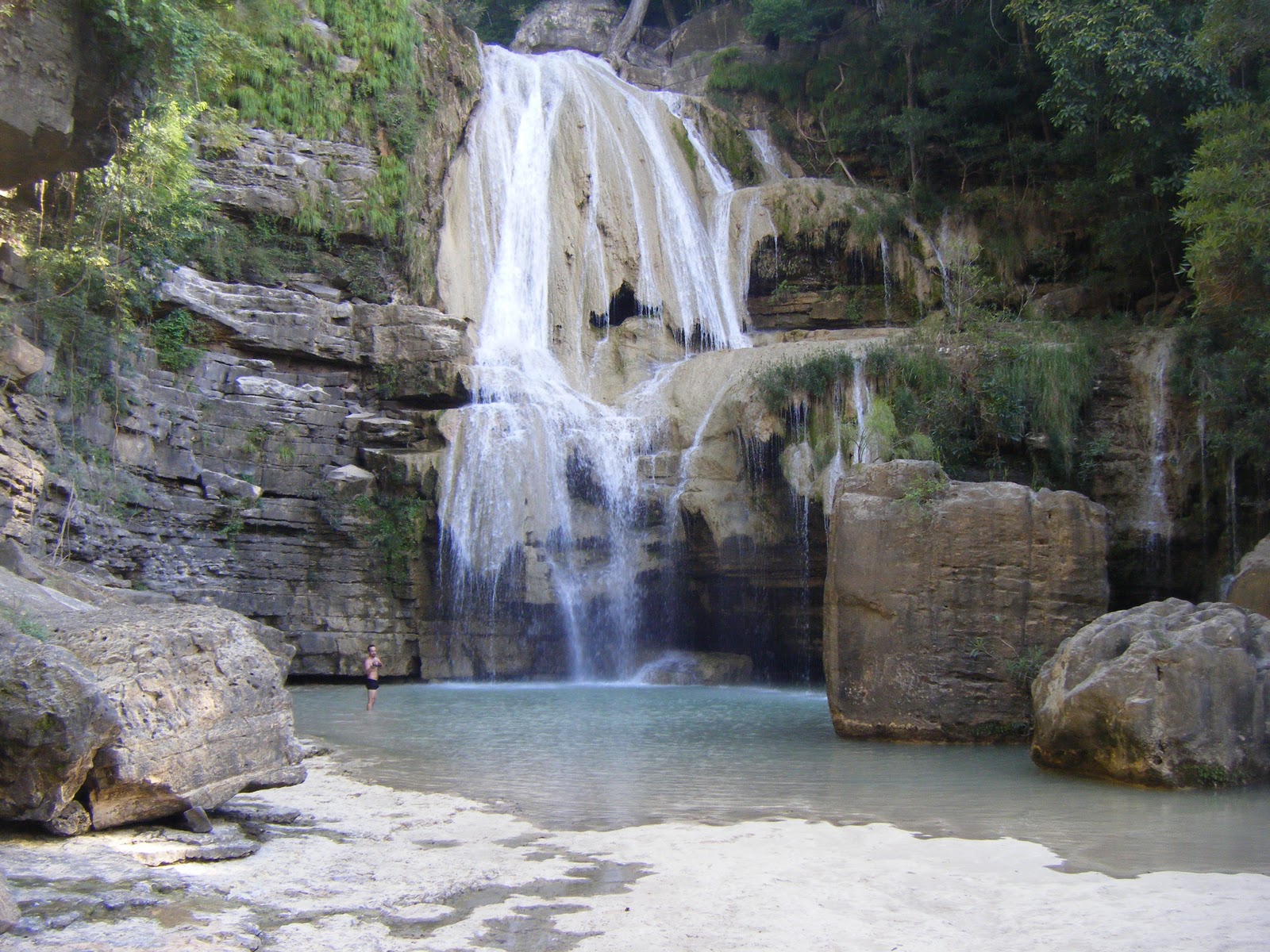
Compared to the 4 week Independent Expedition to Madagascar I have only had a small glimpse on what is on offer when I took week long trip there in March; however it certainly proved itself to be a fascinating and colourful country! We started with a 3 day boat trip down the Tsribihina River, taking us from Miandravazo to the west coast. Cruising down the river we had the opportunity to spot wildlife (lemurs, bats, birds), visit the villages and meet the locals (with very broken French and the odd work of Malagasy!) and take in the relaxed and friendly atmosphere of the country.


Water taxi!

Zebu-car!


At the end of the boat trip we travelled by Zebu-car (possibly the slowest and bumpiest way of travelling!) to the jeeps which took us over to Kirindy Forest where on a night walk you can spot: snakes, jumping rats, chameleons, spiders and lots of nocturnal lemurs- including the tiny mouse lemur!

Close by was Baobab Avenue- an iconic place which you will have seen in the guide books...although trees aren't really my 'thing', I think anyone would find it hard to to be impressed by these 2000 year old monsters!

Baobab Avenue

My trip ended with a visit to the jungle in Andasibe National Park; the cooler temperatures were a welcome relief from the coast! This park is home to the rare indri and diademed sifaka- you can hear their 'call' (more like a 'hoot'!) across the forest every morning.

Sunset on the coast
And then it was back to the UK! It was a whirlwind trip, trying everything that the Independent Expedition to Madagascar covers in their 3rd week. The country certainly is stuffed full of flora and fauna, lending this itself to any budding ecologists or biologists that are considering going on expedition. However, with its Arab, Indonesian, Chinese, French and African influences the people, history and culture of this country was also a fascinating mix and left me desperate to go back and see more!


Sifakas at Andasibe National Park
Check out our expedition to Madagascar here http://www.world-challenge-expeditions.co.uk/page200/madagascar-independent-expedition.html and find out more:


Chameleon!